

Have you ever walked into your baby’s room feeling tense, only to find that your baby suddenly seems more unsettled too?
Babies don’t have a mysterious sixth sense. But they are highly tuned in to the people caring for them: your voice, your breathing, your face and your pace, even when you’re trying very hard to look calm.
This connection is called co-regulation, and it plays a real role in how safe, settled and ready for sleep your baby feels.
Co-Regulation and Baby Sleep at a Glance
- Co-regulation is how babies borrow calm from a caregiver while their own ability to manage emotions is still developing.
- Babies can’t read your thoughts, but they pick up your voice, movements, breathing and tension.
- Co-regulation looks different at every age, from holding a newborn to calmly holding a boundary with a toddler.
- Co-regulation and self-settling aren’t opposites. Feeling emotionally safe makes sleep skills easier to learn.
- The goal isn’t to stop every tear. It’s to stay present and steady while your baby adjusts.
- Slower, simpler and more predictable bedtimes work better than trying harder.
- Your wellbeing is part of the sleep plan, not an afterthought.
What Is Co-Regulation?
Co-regulation is the process through which a baby borrows calm from a responsive caregiver, because their own calm hasn’t fully “downloaded” yet 📥
You see it every day: you pick your baby up and their breathing softens. Your voice brings them down from overwhelm. Your presence alone tells their whole body that the world hasn’t fallen apart.
Babies and toddlers can’t yet regulate strong emotions on their own. Their nervous system is still under construction. When they’re tired, overstimulated or frustrated, they rely on a familiar adult to help them find their way back to calm. They read signals like:
- a steady voice,
- slow, deliberate movements,
- calm breathing,
- a relaxed facial expression,
- reassuring touch,
- predictable responses,
- your presence while they cry.
And we never really outgrow it. Think of how calming it feels to hear your partner’s voice after a stressful day, or when a friend simply listens. That’s co-regulation too.
Self-regulation develops through many, many experiences of co-regulation. Independence is a developmental outcome, not a goal for a newborn.
Can Babies Sense Their Parents’ Stress?
Babies can’t read your mind, but they are excellent observers. They notice when your voice gets higher, your movements get faster or your body feels tense.
Think of it as a tiny emotional radar. It’s surprisingly good at detecting when the adult saying “time to relax” is mentally running through tomorrow’s to-do list.
Babies also learn from patterns. If bedtime often feels rushed or uncertain, your baby may start approaching it with more alertness or resistance. You might notice your baby:
- becoming more clingy,
- crying or protesting more,
- seeking extra contact,
- seeming suddenly full of energy,
- finding it harder to settle,
- repeatedly checking that you’re still nearby.
Of course, your stress doesn’t explain every difficult bedtime. Hunger, discomfort, illness, development, nap timing, light exposure and sleep associations all play a role.
Baby sleep is a puzzle, and co-regulation is one of its pieces.
How Co-Regulation Helps Your Baby Sleep Better
Falling asleep means shifting from alertness into a calmer physical state. A predictable bedtime routine, a suitable sleep environment and an age-appropriate daily rhythm all support that shift. So does your presence.
When a baby feels emotionally anchored, their whole body relaxes: cortisol drops, muscles soften, breathing evens out, the back-arching stops. A calmer baby settles more easily and sleeps more deeply.
Your baby hears your words, but also picks up on what’s underneath them:
- Is your voice steady or strained?
- Are your movements slow or hurried?
- Do your responses stay predictable?
- Do you seem confident about what happens next?
When your words, actions and emotional signals match, bedtime becomes easier for your baby to understand. They may still protest the change from play to sleep, but they can experience those feelings with your support.
Co-regulation doesn’t mean preventing every tear. Crying is communication, and babies sometimes cry even while being held by a loving parent. Your role isn’t to stop the crying as fast as possible. It’s to stay present and steady while your baby adjusts.
Why Tired Parents and Restless Babies Affect Each Other
Research suggests that parental responses and infant sleep influence each other in both directions.
A longitudinal study of 65 couples found links between parents’ tolerance of infant crying and objectively measured infant sleep. Disrupted infant sleep, in turn, affected how parents responded to crying later on. Read the infant sleep and parental cry-tolerance study.
Put simply: restless babies wear out parents, and exhausted parents find it harder to respond calmly and consistently.
After weeks or months of broken sleep, your nervous system may start treating every sound from the crib as urgent. You rush in, try three soothing methods in five minutes, and offer more help than your baby needs in that moment.
It all comes from love. But that extra activity can add stimulation and uncertainty right when your baby needs the opposite.
This isn’t about blaming parents for difficult nights. It’s a reminder that your wellbeing deserves attention too.
Co-Regulation vs. Self-Settling: Do You Have to Choose?
Many parents feel they must choose between supporting their baby emotionally and teaching them to fall asleep independently. You don’t. The two work beautifully together.
Co-regulation is emotional support. It’s long-term, slow-growing and rooted in attachment. It teaches your child: “When I have big feelings, someone is here to help me.”
Self-settling is a sleep skill. It’s practical, learnable, and often easier than parents expect.
A baby doesn’t need to regulate their emotions on their own to learn to self-settle. They only need to feel safe enough to try a small moment on their own, knowing you’ll respond if real distress appears. That trust is the secret ingredient.
You may have read that self-soothing is a myth, and that babies can’t calm themselves at all. In a way, that’s true: no baby learns to settle entirely on their own. Developmental psychologist Dr. Aliza Pressman describes falling asleep independently as the baby doing the last 10% of the work. Your routine, your calm and your connection have already done the rest.
When babies feel emotionally supported, they learn sleep skills more easily. And when they practice small independent moments, you can offer co-regulation when it’s truly needed, not every minute of the day. Like two puzzle pieces that finally click 🧩
What Is Conscious Sleep Coaching?
Conscious sleep coaching isn’t a list of strict rules or a “three nights and done” promise, and it doesn’t ask you to ignore your baby’s feelings. It’s a rhythm: gentle, responsive, predictable and human.
It means responding to real distress, the kind that says “I can’t do this alone,” rather than to every small sound. It also means keeping sight of the bigger picture: your baby benefits from consistency, healthy boundaries and chances to practice falling asleep more independently.
Babies have wishes (like being on mom’s chest 24/7) and needs (like help calming an overtired body). Responding to needs while gently limiting wishes is the balance that helps babies thrive.
It’s the warm “I’m here for you” combined with the calm “and this is bedtime now.”
Co-Regulation by Age: Newborns, Babies and Toddlers
Co-regulation doesn’t disappear as your child grows. It changes shape. What your baby needs from you at 6 weeks is very different from what they need at 2 years.
Newborns (0–3 months)
Newborns depend on you for almost all of their regulation. They can’t yet change what they’re experiencing. They need you to do it for them.
Holding, gentle rocking, shushing, white noise and sucking are all powerful calming tools at this age. Responding promptly is exactly right here. You’re not creating bad habits, you’re building trust.
Around 2–3 months, many babies start bringing their hands to their mouth. It’s one of their very first ways of calming themselves, and a sign that small self-settling skills are starting to appear.
Six-week-old Mia starts fussing after a feed. Her mom holds her upright against her shoulder, sways slowly and hums. Within a few minutes, Mia’s breathing slows and her fists unclench.
Babies (4–12 months)
From around 4 months, babies can start doing a little more of the work themselves: sucking on their hands, turning their head away from stimulation, or resting quietly for a moment before crying.
This is where co-regulation and self-settling start working together. You stay close and reassuring, and give your baby a little space to try.
Nine-month-old Leo rubs his eyes and starts to fuss. His dad lays him in the crib, rests a hand on his tummy and says softly, “You’re tired. It’s sleepy time.” He stays nearby while Leo fusses for a minute, then drifts off.
Toddlers (1–3 years)
Toddlers can move, talk and protest, but they still can’t handle big emotions on their own. Bedtime is often where those big feelings show up: one more book, one more cuddle, one more glass of water.
Co-regulation at this age means staying calm while holding a clear, kind boundary. Name the feeling, stay steady, and keep the routine the same.
Two-year-old Sophie cries when the last book is finished. Her mom sits beside her bed and says, “You wish we could read more. It’s hard to stop. It’s time to sleep now, and I’m right here.” Sophie protests for a moment, then settles with her mom’s hand on her back.
How to Use Co-Regulation at Bedtime: 6 Practical Steps
You don’t need to reach complete inner peace before putting your baby to bed. Parents are human, not scented candles. What helps is making bedtime slower, clearer and more predictable.
1. Give yourself a short transition
Before entering the bedroom, pause. Drop your shoulders, relax your jaw and take two or three slower breaths. Even 30 seconds can help you change pace. This shouldn’t become another task on your evening list.
2. Keep the bedtime routine predictable
Follow the same short sequence each evening, for example:
milk → wash, diaper change, massage, pajamas → quiet connection → sleep sack → white noise → crib
A familiar sequence helps your baby know what comes next, so they don’t need to stay on alert.
3. Slow down your voice and movements
When babies get upset, adults tend to speed up: rocking faster, shushing faster, switching methods faster. Try doing less. Speak slowly, move deliberately, and give one response time to work before trying another.
4. Offer reassurance without constant stimulation
Depending on your baby’s age and needs, reassurance might be your voice, your presence or occasional touch. More input isn’t always more helpful. Constant talking, touching, rocking and repositioning can keep a tired baby alert.
5. Respond with confidence and consistency
Once you’ve chosen a settling approach, give it time before switching to something completely different. Your calm repetition tells your baby: “This feels new, but I’m here, and I know what happens next.”
6. Look at the whole sleep puzzle
If bedtime is still a struggle, look beyond the emotional atmosphere:
- nap timing and length,
- the bedtime window,
- daylight exposure and movement,
- feeding patterns,
- overstimulation,
- the bedtime ritual,
- how your baby usually falls asleep,
- what happens after night wakings,
- how consistent your responses are.
Co-regulation supports sleep, but it can’t fix a daily rhythm that doesn’t meet your baby’s biological needs.
What to Do When Your Baby Is Overwhelmed
In real life, co-regulation is anything but simple. Your baby is crying, your heart is racing, your patience is already stretched thin, and every instinct is shouting “make it stop!”
But co-regulation isn’t about switching the crying off. It’s about meeting your baby where they are, while you’re somewhere between “I’m okay” and “my nervous system is boiling.”
It usually starts with one slow breath. Not because it magically fixes everything, but because it gives your body a second of space. Then:
- Approach with whatever calm you have, even if it’s only 30% today.
- Let your voice reach your baby first, not as a performance, but as a familiar sound that says “you’re not alone.”
- Add touch or hold them if they need more, and let your steadiness help their body soften.
- Once they soften, even a little, gently guide them back toward sleep. Support it, don’t force it.
Some nights it feels like three steps forward, two steps back. That’s normal. That’s co-regulation: a moment of shared steadiness.
What If You Feel Stressed at Bedtime?
One stressful evening won’t harm your baby or undo healthy sleep habits. You don’t need to be perfectly zen. Connection doesn’t require hiding every emotion. You can stay responsive, reconnect after hard moments, and ask for help when you need it.
Some days you’ll be running on low battery. Even then, your presence is still the safest place for your baby to land. And that’s enough.
But if all your hugs go to your baby, you’ll eventually need a refill too. You can’t pour from an empty cup.
If bedtime regularly leaves you anxious, angry or completely drained, take that seriously. The current approach may be asking too much of you, the routine may need adjusting, or your family may benefit from personal support.
Sometimes stress is a sign that you need more support. Talk to your doctor or midwife if low mood, anxiety or a feeling of disconnection from your baby lasts more than two weeks. Talk to your pediatrician if your baby cries for long periods and is very hard to soothe. And if you ever feel close to losing control, it’s okay to lay your baby safely on their back in the crib, step out of the room for a few minutes, and breathe.
The parent’s needs belong in the sleep plan too.
Frequently Asked Questions
Can parental stress cause baby sleep problems?
Parental stress is rarely the only cause. It can, however, affect bedtime interactions, consistency, how much stimulation is offered during settling, and how often night wakings happen. Infant sleep and parental stress can also influence each other.
What is an example of co-regulation at bedtime?
A parent stays next to the crib, uses a steady, calming voice, offers occasional reassuring touch, and keeps the same predictable response while the baby settles.
Does co-regulation mean picking my baby up whenever they cry?
No. The right response depends on your baby’s age, temperament and needs. Co-regulation means offering a responsive, reassuring presence. It doesn’t always require picking up, feeding or continuous physical contact.
Can a baby learn independent sleep while being supported?
Yes. Babies and toddlers can gradually learn new ways of settling while their parents stay emotionally available and consistent. The right balance depends on your child’s age, temperament, development and family situation.
Why does my baby get more upset when I try harder to soothe them?
A tired or overstimulated baby can become more alert when several soothing methods are used at once. Slowing down, reducing stimulation and sticking to one consistent response often makes settling easier.
What are the signs that a baby is stressed?
Common signs include turning away or avoiding eye contact, arching the back, clenched fists or splayed fingers, hiccups, yawning or sneezing when not tired, jerky movements and fussing that quickly escalates. Older babies may become clingy, wake more often or struggle to settle. These signs usually mean your baby needs less stimulation and more calm support.
Do babies release cortisol when they cry, and is it harmful?
Yes, cortisol rises when babies cry. That’s a normal part of the stress response and happens in every baby. What matters is context. Short-lived stress, supported by a responsive caregiver, is part of healthy development. Researchers are concerned about prolonged, severe stress without adult support, sometimes called “toxic stress.” That’s very different from a baby protesting at bedtime with a loving parent right there.
Can babies sense when their mom is sad?
Babies notice changes in your face, voice and energy, so they can pick up that something feels different. Everyday sadness is part of life and won’t harm your baby, especially when you stay warm and connected. If low mood lasts for more than two weeks, talk to your doctor or midwife. Postnatal depression is common and treatable.
Will my 7-month-old remember me yelling?
Your baby won’t form a lasting, conscious memory of one moment. But babies do absorb emotional patterns through implicit memory, so the overall atmosphere matters more than a single hard moment. If you lose your temper, repair: calm down, reconnect, and soothe your baby. Repair teaches your child that relationships stay safe, even after difficult moments.
Can babies feel tension between parents?
Yes. Babies pick up on raised voices, a tense atmosphere and changes in routine. Everyday disagreements are normal, but frequent, intense conflict can make it harder for a baby to feel settled. Keeping arguments away from bedtime and sharing sleep duties as a team can help. Sleep struggles can strain a relationship too, so support for both of you matters.
Can dads, grandparents or daycare staff co-regulate a baby?
Absolutely. Any consistent, responsive caregiver can help a baby feel calm and safe. Familiarity matters, so a new caregiver may need some time before your baby settles easily with them. That’s especially relevant when your child starts daycare.
Could Co-Regulation Be the Missing Piece in Your Baby’s Sleep Puzzle?
You may be trying hard at bedtime, and your baby still struggles to settle, wakes often or needs the same intensive support after every sleep cycle. In that case, another general sleep tip probably won’t solve it.
In my personalized 4-week Baby Sleep Solution, we look at your child’s rhythm, sleep environment, feeding, development, settling habits and the needs of your whole family. Together, we build a clear plan you can follow with confidence.
You don’t have to hold every piece alone. The sleep puzzle makes more sense when we put it together.





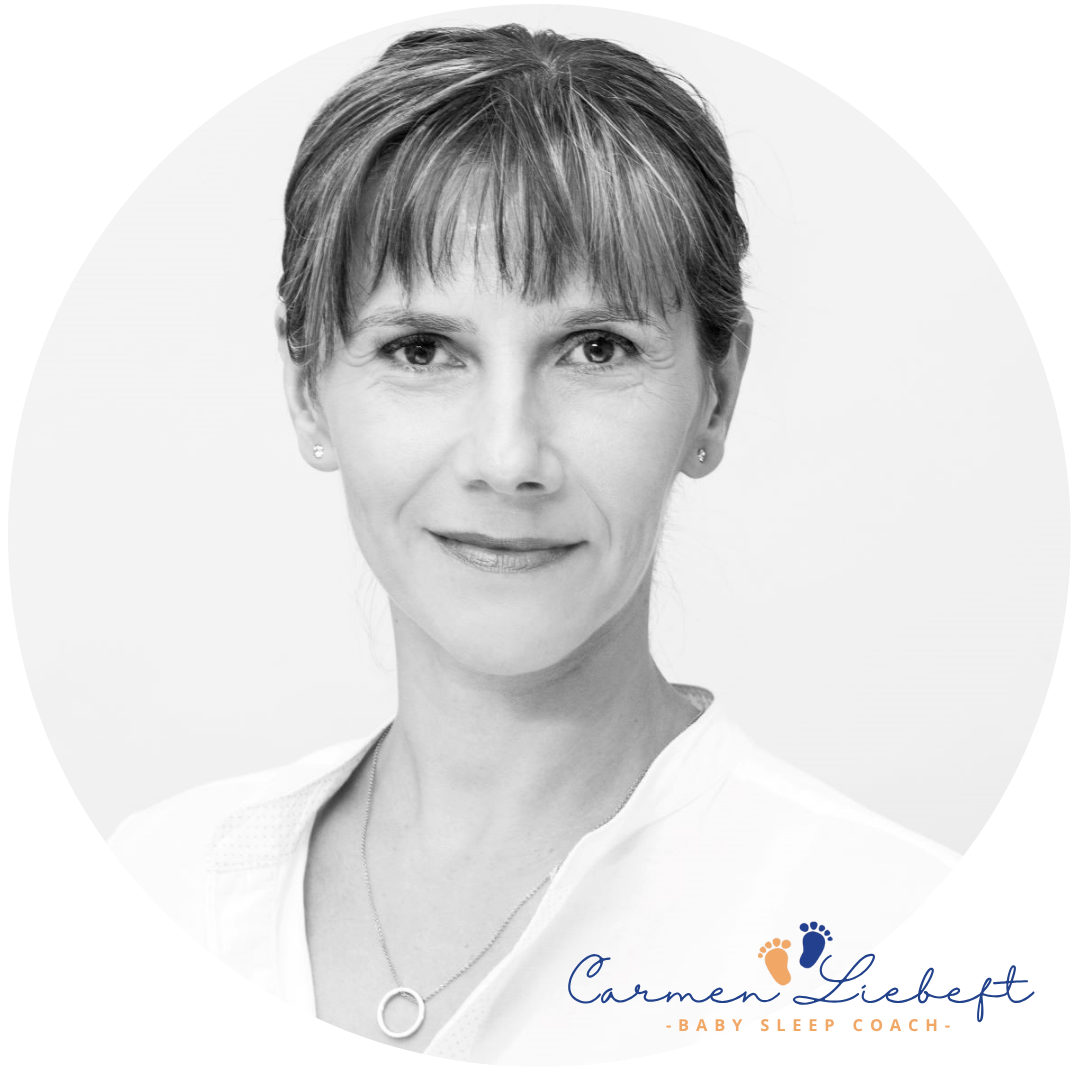
Carmen Liebert
Founder of Happy Baby Schlaf
Carmen Liebert is a certified Baby & Toddler Sleep Consultant, creator of the Baby Sleep Solutions Method. Over the last 5 years she has been helping 300+ English-speaking families across Europe get their sleep back through a holistic, science-based coaching approach which looks beyond routines and soothing techniques to uncover the missing pieces in each child’s sleep puzzle.
She specialises in babies & toddlers’ sleep from newborns to 4-year-old kids and also supports parents of autistic children with sleep challenges.