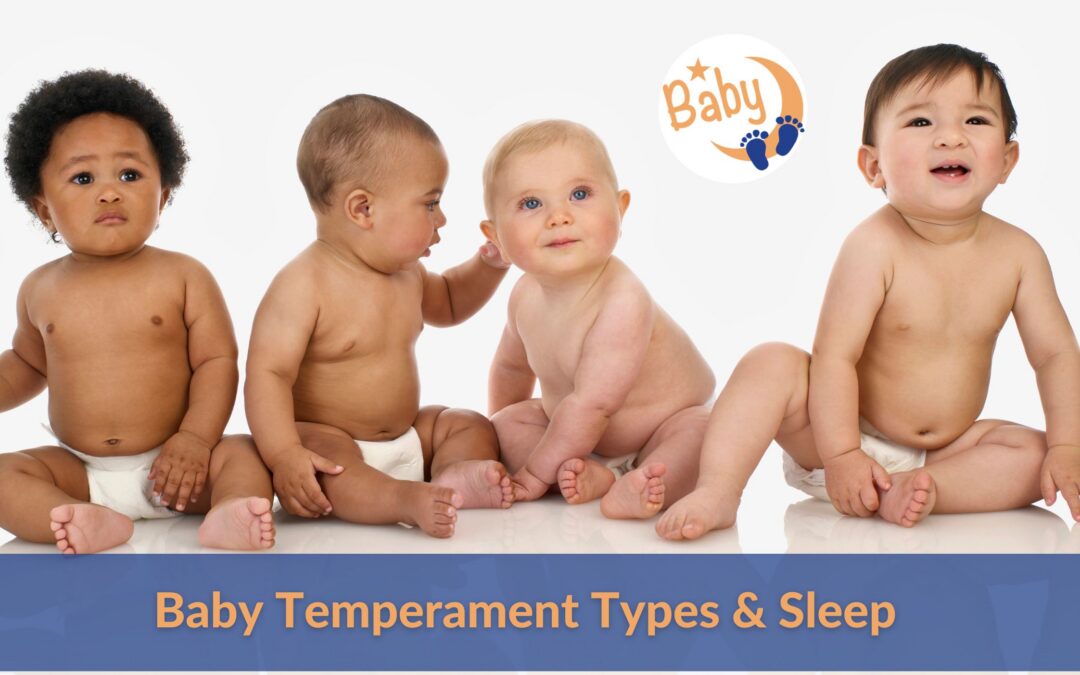
It is 6:30 pm. The room is dark, the white noise is on, and you are following the same cosy bedtime routine for the last 3 weeks. Your phone lights up: a friend has posted that her daughter went down at 7 without a sound. Your baby is wide awake, fighting its cot as if it were on fire.
Same books, same routine, similar environment. Different baby.
What you are seeing is most likely baby temperament: the built-in way your baby reacts to the world, including how strongly, how fast and how easily they adapt. Babies arrive with different settings, and sleep shows them early. Temperament does not decide whether your baby can sleep, but it often decides which kind of help works best.
How baby temperament shows up at bedtime
Temperament is easiest to spot in small moments. One baby sleeps through the dishwasher and a birthday party. Another startles at a zip. One baby accepts a new sleep environment or a new babysitter within a day or two. Another needs a month and a lot of reassurances before the new thing counts as normal.
Researchers look at many things: how active a baby is, how intense the reactions are, how clingy they are to mom, how sleep and feeding are, how easily the baby adapts and how quickly the mood shifts. None of these is good or bad. Each one simply asks for a slightly different approach.
The 5 baby temperament types
Tracy Hogg, a British maternity nurse, described five types in her book Secrets of the Baby Whisperer: Angel, Textbook, Touchy, Spirited and Grumpy. These are a handy parenting guide, not a scientific test. Most babies are a mix of types, and your baby can change as she grows.
| Type | What it can look like | Quick tip* |
| Angel | Flexible and easygoing, adapts quickly, cries rarely and calms easily | A predictable wind-down and age-appropriate schedule keep things easy |
| Textbook | Predictable, cues are easy to read, cooperates when change is slow | Introduce changes such as a nap drop in small steps |
| Touchy | Sensitive, excited easily by noise, light or new places, may cling to a parent | A calm, quiet sleep space, slow and reassuring settling, and extra time to get ready before changes |
| Spirited | Very active and vocal, drawn to anything that bangs or flashes | Active play in the day, sensory stimulation before bedtime, a calm wind-down, nothing stimulating in the sleep space, spaced soothing |
| Grumpy | Moody and easily irritated, slow to accept change | A very consistent bedtime ritual with similar steps in the same order every day |
* The last column is what I do in my own work with families. It is my experience, not a research result.
Where baby temperament comes from
You have probably heard that temperament is “half genes, half environment“. But it’s more complicated than that. Some studies show that genes play a real part, but we are not sure which part. One study of twins at 5 and 18 months found that genes explained about a third of the differences in how easily babies get upset.
The best-known research comes from Alexander Thomas and Stella Chess. They followed children from infancy and found 9 temperament traits which shape a baby’s temperament: activity, regularity, initial reaction, adaptability, intenisty, mood, distractibility, persistence & sensory threshold. They sorted babies into:
- easy-going (generally happy and active from birth and adjust easily to new situations and environments.,
- slow-to-warm-up (generally observant and calm and may need extra time to adjust to new situations)
- difficult or exuberant (described as being moody, of high intensity, with an irregular routine and slow to adapt to new experiences).
But many babies fall somewhere in between. “Difficult” is just a label which hides that traits like persistence and determination help later in life.
What matters most in real life is what Thomas and Chess called “goodness of fit“: how well your baby’s temperament matches the surroundings. A sensitive baby in a calm, predictable room has a very different night from the same baby in a loud, busy one.
Studies in the first year of life link an easily upset temperament with more sleep problems and more night waking on average. That is a reason to work with your baby’s temperament, while looking at your own reaction as a parent.
Why your reaction matters
Your baby reacts to you, and you react to your baby. At 3am that loop runs fast: she cries, your shoulders tense, your voice gets sharper, and she cries harder.
Researchers see the same loop. In one study that watched mothers at bedtime, babies were less upset and slept more when mothers were calmer and more tuned in, and more upset babies made it harder for mothers to stay that way. A review of parenting and infant sleep found that the links go both ways.
Temperament decides how strongly your baby reacts. Your response and parenting style often decides how long the reaction lasts. A sensitive baby may pick up tension or anxiety quickly, and a spirited baby can be wired up by an excited parent.
Here are 4 tips that can help at bedtime:
- Breathe out before you walk in. One slow breath changes your voice.
- Use the same mantra in the same quiet tone every night.
- Move slowly and keep the room dark.
- Take a pause if you feel yourself tensing. Put your baby down safely, and walk out of the sleeping room for a couple of minutes.
None of this means your reaction causes a sleep problem. Temperament, age, health and all the pieces of the sleep puzzle play a part, and your tiredness is real. What counts is the pattern over weeks, not one rough night.
Case Study from my own practice as a baby sleep coach
“A textbook baby? That must be a mistake.”
That was the reaction of one family I worked with when their 10-month-old’s temperament quiz suggested this profile. He had struggled with allergies, was very restless and, in his parents’ words, would “cry hysterically.” A baby who tended to follow predictable patterns and reach milestones roughly “by the book” did not match their daily experience.
I reassured them that my quiz offered a broad starting point. We would observe their baby together and learn more about his temperament throughout our sleep coaching journey.
In less than a week, he was sleeping through the night. His parents could hardly believe the change. 😊
This case, like many others from my experience, shows that overtiredness and physical discomfort can make a baby’s underlying temperament harder to recognise. Sure, a quiz does not define a baby, but combined with careful observation, it can help us choose a suitable sleep coaching approach that fits the child and the family.
What works best for each temperament
You can start with a Baby Temperament Quiz and assess the situation. Contact me if you want to get my quiz.
Most babies are a mix, so take what fits the most and leave the rest to the “environment”.
Where to start this week
- Take the Baby Temperament Quiz (ask me if you want the link)
- Watch your baby for about a week. Note how they react to new things, how intense the reactions are, how regular sleep and feeding are and how quickly its mood shifts.
- Pick the closest type, and expect overlap. Use it as a starting point, not a label.
- Try one or two changes from that type. Give them a couple of weeks before changing anything.
- Watch your own reaction too. Calm, steady and the same every night is what your baby can rely on.
When to ask for help
Temperament is a trait, not a diagnosis. Speak to your pediatrician if your baby is hard to console for long stretches, feeds poorly, snores loudly or seems to pause breathing in sleep, shows signs of pain, loses skills or if you have concerns about development or sensory differences.
If there are no medical concerns and you want to improve the sleep of your entire family, then baby sleep coaching might be a good option for you. Check my Baby Sleep Solutions Online Course which you can follow at your own pace, at first.
If you wonder whether anxiety or autism-related needs may be part of your child’s sleep picture, my Autism and Anxiety Sleep Coaching Package is designed for that. Because neurodivergent kids can sleep well too!
Or if you are open to change and want to get your sleep back, then book a free Discovery Call with me so we can talk & make a personalised sleep plan for your baby.
FAQ
At what age can I tell my baby’s temperament? Patterns can show in the first months. They usually become clearer during the first year, so go easy on labels for a newborn.
Can a baby’s temperament change? Temperament stays fairly steady, but it is not set in stone. Research shows it can change after infancy, and parents learn to work with their child’s style over time.
Can my baby fit more than one type? Yes. In the Thomas and Chess research, about a third to 40 percent of children did not fit neatly into one group. Hogg’s types overlap in the same way.
Does an intense temperament mean my baby will always sleep badly? No. Research shows an average link, not what will happen with your baby. It suggests these babies may need more steady, personal support, not that good sleep is out of reach.
Did my parenting cause my baby’s temperament? No single parenting decision creates a sensitive or spirited baby. Twin research shows that genes play a real part, and babies and parents also shape each other’s behaviour.
Can my own stress make my baby sleep worse? Partially. Research describes a two-way loop: calmer, more tuned-in parents at bedtime had babies who were less upset and slept more, and more upset babies made it harder for parents to stay calm. How you respond is one of the pieces of the sleep puzzle which you can change.
Carmen Liebert
Founder of Happy Baby Schlaf
Carmen Liebert is a certified Baby & Toddler Sleep Consultant, creator of the Baby Sleep Solutions Method. Over the last 5 years she has been helping 300+ English-speaking families across Europe get their sleep back through a holistic, science-based coaching approach which looks beyond routines and soothing techniques to uncover the missing pieces in each child’s sleep puzzle.
She specialises in babies & toddlers’ sleep from newborns to 4-year-old kids and also supports parents of autistic children with sleep challenges.