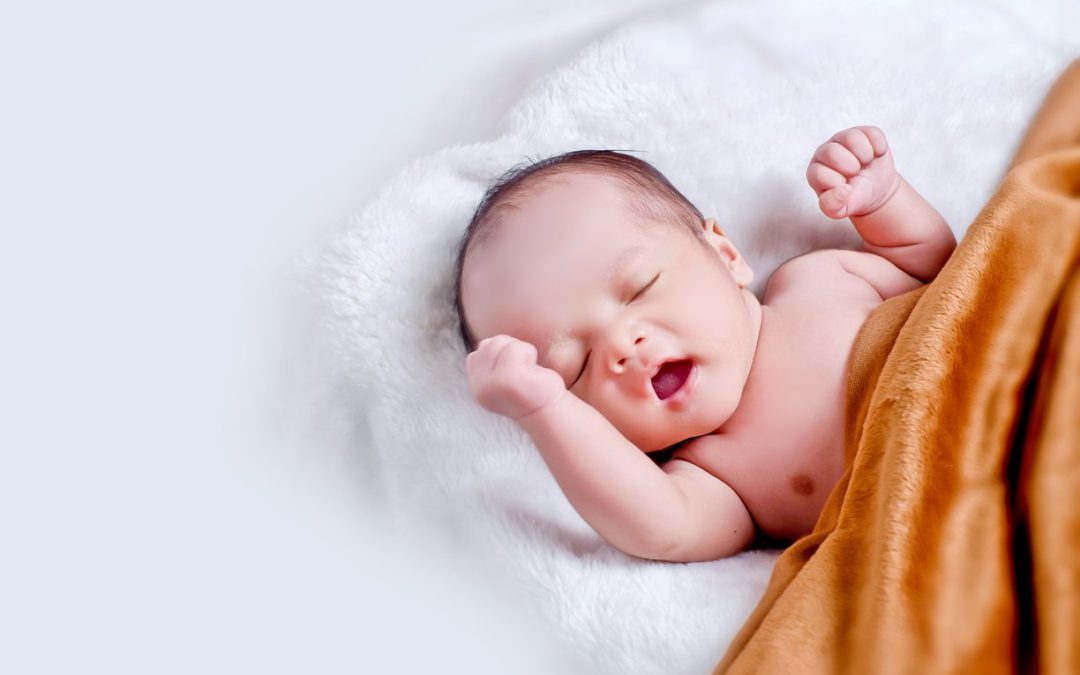
Even if there is no 100% consensus on why we actually need to sleep, most specialists agree on the negative impact of sleep deprivation on our health. In babies, sleep lays the foundation for a healthy brain, steady growth, a good mood and a strong immune system. And it doesn’t stop with the baby: it shapes the well-being of the whole family.
Why sleep matters for babies: at a glance
- Sleep is when babies’ brains sort and store what they learned – even a short nap helps
- Deep sleep supports physical growth and healthy weight gain
- Enough sleep supports mood and emotional balance, while overtiredness makes settling harder
- Poor baby sleep is linked to poorer sleep and mood in parents
- Sleep needs change with age, and safe sleep always comes first
Below you can find some reliable studies which prove and emphasize how important sleep is for our health, starting from an early age.
Sleep and brain development: memory and learning
A baby’s brain is busy all day: new faces, sounds, words and movements. Sleep is when the brain sorts through all of this and decides what to keep. This process is called memory consolidation, and research shows it starts very early.
In one study, 3-month-olds remembered a new face 1.5-2 hours later only when a short sleep followed learning. In another, 6- and 12-month-olds who took a nap of at least 30 minutes after learning a new action remembered it later, while babies who stayed awake did not.
Naps are not just a break for parents. They are part of how babies learn.
Sleep and healthy growth
During deep sleep, the body increases its release of growth hormone, which supports growth and development. That is one reason deep, uninterrupted sleep matters so much in the first years of life.
Sleep also seems to matter for weight. A large meta-analysis found that short sleep was linked to a higher risk of developing overweight or obesity: about 40% higher in infancy and about 57% higher in early childhood. Researchers describe short sleep as a risk factor or marker, so this is a link, not a guarantee. But it is one more reason to protect your baby’s sleep from the very beginning.
Read more in our article on pediatric sleep and obesity.
Sleep and the immune system
Sleep and the immune system are closely connected. A systematic review found that shorter sleep was linked to more upper respiratory infections, and sleep influences the immune system’s messenger proteins (cytokines). Studies in babies are limited, but many parents notice the same pattern at home: an under-slept baby seems to catch more bugs and take longer to recover.
Sleep, mood and emotional balance
A baby who sleeps well is usually calmer, easier to soothe and more open to connection. A baby who is under-slept is often fussier, clingier and harder to console. Your own calm plays a part here too, a process known as co-regulation.
There is also a paradox: the more tired a baby is, the harder it can be to fall asleep. Overtiredness is commonly explained by stress hormones, like cortisol, keeping the body in alert mode. That is why putting your baby down at the right time, with a calm, age-appropriate bedtime routine, works better than waiting until they are exhausted.
Why your sleep matters too
Baby sleep is a family matter. In a large Norwegian study of more than 4,000 women seven weeks after birth, more than half reported poor sleep, and poor sleep was associated with depressive symptoms.
Research on mothers of 12-month-olds also links poor infant sleep to poorer maternal sleep, more postnatal depression and more family stress.
Chronic exhaustion affects your patience, your mood, your relationship and your ability to respond to your baby. That is why asking for help with sleep is not selfish. It is part of taking care of your baby. If you are running on empty, start with these sleep tips for moms.
Because “a happy baby means a happy mom and a happy family”!
FAQs About Baby Sleep
What happens if babies don't sleep?
What is the 5-3-3 rule for babies?
There is no official, standardized 5-3-3 rule. Online, the name is used for different things: some sources describe wake windows for older babies (5 hours awake before the first nap, 3 before the second, 3 before bedtime), others describe a night pattern of 5 hours of sleep, 3 hours awake and 3 hours of sleep. Because this math formula doesn’t match ech child, I don’t recommend following it as a rule. An age-appropriate routine built around your baby’s age, clock and tired signs works better.
At what age do babies need less sleep?
Sleep needs go down gradually as babies grow. As a general guide, newborns sleep for about 16-18 hours, babies between 4 and 12 months need around 14-16 hours in 24 hours (including naps), toddlers between 1 and 2 years around 12,5-14 hours, whereas kids between 2 and 3 years of age have lower sleep needs (12-13 hours / day).
Every baby is different, although their general needs are similar. But the way sleep is spread across the day changes too: fewer, longer naps and longer stretches at night.
Are co-sleeping babies happier?
Babies need closeness, and that doesn’t have to mean sharing a bed. The American Academy of Pediatrics and the World Health Organisation (WHO) do not recommend bed-sharing. They recommend room-sharing, with your baby on a separate safe sleep surface in your room, for at least the first 6 months. Connection can happen in many other ways, like cuddles before bedtime and co-regulation.
At what age do babies sleep the worst?
Sleep tends to get harder around big developmental leaps, often called sleep regressions. They typically show up around 4 months, 12 months, 18 months and 2 years. They are normal and more of a progression, but if the baby learned to connect sleep cycles from an early age, the impact on sleep is minimal.
What time do babies sleep best?
Babies sleep best at night, and most do well with an early bedtime, often between 6 and 7:00 pm depending on age. Morning daylight, age-appropriate wake windows and a consistent bedtime routine help your baby settle more easily.
Carmen Liebert
Founder of Happy Baby Schlaf
Carmen Liebert is a certified Baby & Toddler Sleep Consultant, creator of the Baby Sleep Solutions Method. Over the last 5 years she has been helping 300+ English-speaking families across Europe get their sleep back through a holistic, science-based coaching approach which looks beyond routines and soothing techniques to uncover the missing pieces in each child’s sleep puzzle.
She specialises in babies & toddlers’ sleep from newborns to 4-year-old kids and also supports parents of autistic children with sleep challenges.