Could better baby sleep help shape the future of our society?
Why baby & toddler sleep consultants deserve a better place in the conversation about declining birth rates and family wellbeing.
Germany and the rest of Europe are having fewer babies. And they are far from the only parts of the world facing this challenge.
Governments are looking for ways to encourage people to start families or have more children. Financial incentives, parental leave, subsidised childcare and family-friendly employment policies are all part of the conversation.
But I believe there is another important aspect of family life that deserves much more attention: SLEEP.
Because when parents think about having another baby, they don’t only think about money, childcare or the size of their home.
They also remember what life felt like with their first baby:
- the sleepless nights,
- the exhaustion,
- the arguments with their partner,
- the feeling that their career, social life and even their identity had somehow disappeared.
And sometimes, the thought of going through all that again is simply overwhelming.
As a certified baby and toddler sleep consultant, I believe that professional sleep support has a valuable role to play in helping families feel more confident about parenthood. It may even help some parents feel more optimistic about the possibility of having another child.
Declining birth rates: A challenge for modern societies
According to Germany’s Federal Statistical Office (Destatis), the country’s fertility rate fell to 1.32 children per woman in 2025, with the lowest annual number of births recorded since the Second World War.
This is part of a wider international trend.
The OECD reports that fertility rates across its member countries averaged just 1.5 children per woman in 2022, well below the population replacement level of approximately 2.1.
There are many reasons behind these developments: housing costs, financial uncertainty, career ambitions, changing lifestyles and difficulties combining work with family responsibilities.
Governments are responding with different forms of support.
In Germany, for example, parents benefit from Elterngeld, Kindergeld, maternity protection and access to subsidised childcare. Nordic countries such as Sweden, Norway and Denmark have invested heavily in parental leave and early childhood education. France also has a long tradition of family-support policies.
These measures are valuable, even if they cannot reverse declining birth rates on their own.
But while we invest in helping parents afford children and return to work, are we doing enough to help them cope with the physical and emotional demands of raising those children?
Especially during the first years, when sleep deprivation can affect almost every part of family life.
The experience of your first baby can shape how you feel about having another one
I know this from my own experience.
When my first child was born in 2005, I had no idea that professional baby sleep support even existed.
I was terribly sleep-deprived. Night after night, I hoped things would improve. But our sleep challenges continued for years.
At some point, I started believing that becoming a mother meant sacrificing my sleep, my career, my personal time, my health and even my relationship.
That was simply the price of motherhood… or so I thought.
Thirteen years later, when my daughter was born, I was determined to have a different experience.
I started learning about baby sleep, discovered age-appropriate routines and settling techniques, and eventually sought professional sleep coaching myself.
It changed the way I understood my baby’s sleep and, more importantly, gave me confidence that I could actually do something about our sleepless nights.
That experience eventually inspired me to become a baby sleep consultant.
And it taught me something I still believe strongly today:
Raising a family naturally comes with sacrifices, but also immense joy. And even when doing one of the hardest jobs in the world, parents should still have room for their own wellbeing, healthy relationships and personal ambitions.
Of course, sleep (or the lack of it) is not the only factor in the decision to have another child. Financial circumstances, health, relationships and personal wishes all matter.
But I believe the memory of those first exhausting years clearly influences the decision about a potential second baby.
What baby sleep consultants contribute beyond better nights
When people hear the words baby sleep consultant, they often imagine someone letting a baby cry alone.
That is far from the truth in most cases.
A qualified baby and toddler sleep consultant looks at the whole picture: sleep biology, age-appropriate routines, temperament, feeding, the sleep environment, movement and sensory needs, light, connection, family dynamics and parental responses.
And when families receive appropriate, individualised support, the benefits can reach far beyond the baby’s bedroom.
- Parents regain confidence in their ability to raise children
Sleep deprivation can make even simple parenting decisions feel overwhelming. Should I feed my baby again? Is this another sleep regression? Am I doing something wrong?
A knowledgeable sleep consultant helps parents understand their baby’s sleep and respond with more confidence. Instead of questioning every decision, they gain the knowledge and practical tools to handle future sleep challenges.
- Mothers can enjoy motherhood without losing their identity (or sanity)
Being a mother is a wonderful role, but it shouldn’t mean giving up everything else.
Better sleep can give mothers more energy and time for their careers, friendships, hobbies and personal ambitions. Sometimes, it simply means enjoying a book or a film without falling asleep halfway through!
- Couples can reconnect and protect their relationship
Months of interrupted sleep can affect even the strongest relationships. Patience runs low, intimacy suffers and couples may find themselves sleeping in separate rooms for years.
Better family sleep can help parents enjoy their evenings together again, improve communication and strengthen their teamwork. Families who wish to move towards separate sleeping spaces can receive age-appropriate support, while respecting their child’s needs and safe-sleep guidance.
- Parents can return to work with more energy and clarity
Imagine managing an important meeting after waking up five times the previous night. And then doing it again tomorrow.
Improving family sleep can help working parents feel more focused, productive and better equipped to balance their professional and family responsibilities. So that when they come back home after work, they have energy left for their kids, instead of running on empty batteries.
This is why I believe baby sleep support deserves a place among employer-sponsored family benefits, alongside flexible working hours and childcare.
- Better sleep supports parents’ emotional wellbeing
Chronic sleep deprivation can affect mood, patience and emotional resilience. Research suggests that certain infant sleep interventions can also improve maternal wellbeing, although outcomes vary.
When parents finally get more restorative sleep, everyday challenges may feel less overwhelming.
And life can start looking a little more colourful again.
- Parents can enjoy their children rather than merely survive the day
When you’re exhausted, even a family outing or a playful afternoon can feel like another task to get through.
Better sleep can give parents more energy, patience and emotional availability to enjoy those precious early years.
Because childhood passes quickly, and parents deserve to remember more than just the sleepless nights.
If governments support childcare, why not also support parental sleep?
Consider how much attention modern societies give to helping parents manage the practical responsibilities of raising children.
| Existing family support | What it helps families achieve |
| Parental leave and financial benefits | Time and financial stability after childbirth |
| Subsidised childcare | Opportunities to return to work |
| Midwives and postnatal healthcare | Medical recovery, infant health and early parenting guidance |
| Parenting classes and family counselling | Knowledge, confidence and emotional support |
| Workplace family benefits | Better compatibility between professional and family responsibilities |
Professional baby sleep support could help families get the help they need to overcome sleep challenges during sensitive years, improve their own sleep and build the confidence they need to raise resilient and healthy kids.
These services complement one another.
A midwife provides essential support during pregnancy and the postnatal period. Paediatricians assess children’s health and development. Psychologists and other mental health professionals support parents facing emotional or psychological difficulties.
Baby sleep consultants can provide practical guidance on sleep habits, routines and settling techniques, cooperating with the entire support network mentioned above.
Yet professional baby sleep coaching is generally something parents reluctantly discover later on and have to pay for privately.
I believe there is a strong argument for making evidence-informed sleep education and appropriate specialist support more accessible.
Imagine if parents could receive practical baby sleep guidance through family centres, employer wellbeing programmes or publicly supported parenting services.
Not as a replacement for medical care, but as another piece of the family wellbeing puzzle.
Such programmes could most likely improve parental sleep, wellbeing, work participation and confidence about future family plans.
Could better sleep encourage families to have more children?
I honestly do not have a clear answer to that. There is currently no research evidence that baby sleep coaching increases birth rates.
And choosing to have one child, several children or no children at all is a deeply personal decision that deserves respect.
But there is a reasonable question worth asking:
If parents knew that having a baby would not necessarily mean years of severe sleep deprivation, would some feel more confident about having another baby?
If they knew they could ask for professional sleep support, even during pregnancy or when things became difficult?
If they could imagine enjoying motherhood while resuming their career, relationship and personal identity?
If their first experience of parenthood had been less exhausting and more fulfilling?
Perhaps for some families, the answer would be yes.
What would all that mean for the society?
That possibility deserves more attention, especially in societies investing considerable resources in helping people extend their family plans.
We probably cannot solve declining birth rates solely through baby sleep coaching. But improving the everyday experience of parenthood may be one valuable part of creating a society in which families feel better supported.
Supporting parents means supporting the future of society
When I became a baby sleep consultant, my mission was to help exhausted families sleep better.
Over time, I realised that the impact of this work can be much broader.
We help parents regain confidence. We help new mothers overcome maternal depression. We help couples save their relationship. We help mothers and fathers make room for their professional and personal lives. And we help families establish healthy sleep habits that are a solid foundation for life. And above all, we help children get the restorative sleep they need to thrive and develop well.
A well-rested family has more opportunities to enjoy the life they have built together.
And perhaps, when parents look back on those first years with more joy than exhaustion, the idea of welcoming another child may feel less daunting.
If we want a society where families can grow and thrive, we need to care about what happens after the baby is born. Including what happens at 3 am.
Because supporting parents’ sleep is also supporting their health, relationships, confidence and quality of life.
And that is an investment worth making!
—
If you wantt to understand your baby’s sleep better and feel more confident about your family’s nights, explore my Baby Sleep Solutions Online Course or discover more about my Individual Baby Sleep Coaching at Happy Baby Schlaf.
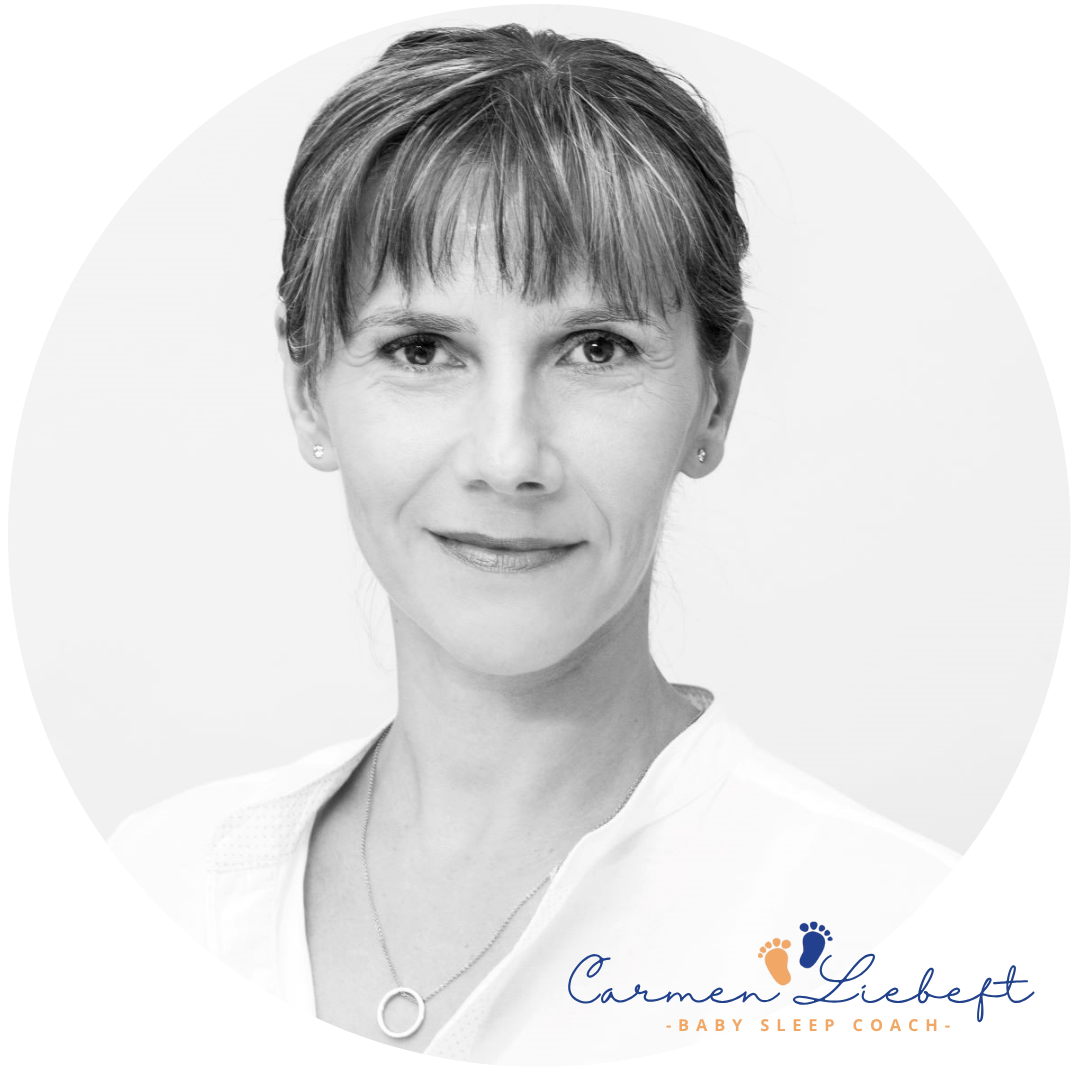
Carmen Liebert
Founder of Happy Baby Schlaf
Carmen Liebert is a certified Baby & Toddler Sleep Consultant, creator of the Baby Sleep Solutions Method. Over the last 5 years she has been helping 300+ English-speaking families across Europe get their sleep back through a holistic, science-based coaching approach which looks beyond routines and soothing techniques to uncover the missing pieces in each child’s sleep puzzle.
She specialises in babies & toddlers’ sleep from newborns to 4-year-old kids and also supports parents of autistic children with sleep challenges.