Why do babies need a dark room to sleep?
Before we discuss routines, naps or how the baby falls asleep, there is one thing I ask parents to check, even before starting our sleep coaching journey: the room where their baby sleeps.
When you have been up several times overnight, rearranging the bedroom might feel rather low on your list. But this is one piece of the sleep puzzle we can work on straight away, even before your baby arrives.
And my recommendation often surprises parents: make the room pitch dark for baby sleep.
A darker room can reduce distractions and help create a familiar setting for rest. At night, keeping light low also supports the distinction between day and night. However, babies can sleep in daylight, and complete darkness is not a requirement for every child or every nap.
So why do I recommend it, and how dark does the room actually need to be?
Will a dark room help your baby settle to sleep?
Think about how much there is to look at in your baby’s bedroom. Curtains, pictures, toys, perhaps a fascinating ceiling light that deserves another twenty minutes of attention.
A darker room makes those things less interesting. Reducing visual stimulation can help babies and toddlers settle, particularly when the world around them is much more appealing than going to sleep.
This is why I suggest checking the environment early in sleep coaching. It gives us something practical to adjust while we look at the other pieces, including naps, natural light exposure, feeding, bedtime, connection and settling to sleep.
A pitch dark room cannot answer every baby sleep question. But it is an important piece of the sleep puzzle.
Darkness, light and the body clock
Light helps our bodies distinguish daytime from night-time. Melatonin, the hormone signalling sleep to our body, is sensitive to light exposure.
Research in children aged three to almost five found that evening light could suppress melatonin. That supports paying attention to lighting before bed, although newborns might react a bit differently to it.
My practical advice is to begin lowering the lights during the bedtime ritual, simulating the sunset, rather than moving straight from a brightly blue lit room straight into the cot.
At night, you can use a dim light to feed, change and care for your baby safely, while keeping the room as dark as possiible. The NHS also recommends low lighting and quiet interactions overnight.
How dark should your baby’s room be?
For babies who struggle to settle or wake as the room brightens, I often recommend trying blackout curtains or blinds.
Check the room at the time the problem happens. Curtains that look excellent at bedtime may reveal their limitations at five in the morning.
Blocking early morning brightness may help some children sleep longer. It is a useful adjustment to try, rather than a guarantee that every early wake will disappear.
But many times one small strip of light can make your baby turn into an “early bird” in the morning. So, keep the sleeping room until you decide to start the day.
Install window coverings securely and keep cords well out of reach. Keep the cot clear and follow Safe-sleep guidance, including placing your baby on their back, in their cot, on a firm, flat mattress.
What about daytime naps?
Parents sometimes ask: “If I darken the room for naps, how will my baby learn the difference between day and night?”
For newborns, start with a clear contrast between daytime life and night-time care to entrain their circadian rhythm. Open the curtains during the day, interact with your baby and keep nights quieter and dimmer. You do not need to darken the house every time your newborn dozes.
For an older baby who is easily distracted during naps, try closing the bedroom curtains for sleep, at least for the main nap of the day – the lunch nap – then bring light on afterwards. Darkening the room for naps at home can help some children settle easier.
Is my baby afraid of the dark?
It is understandable to wonder how your baby feels when you turn out the light, especially if you prefer a little light yourself.
If your baby protests at bedtime, first consider their needs: hunger, discomfort, tiredness or wanting your reassurance. Darkness alone is not a reason for its restlessness.
As children grow (usually after 2,5 years of age), some develop bedtime fears. If your toddler shows genuine fear around this age, take it seriously and offer reassurance. A dim night-light may help them feel more comfortable.
Is sleeping in a dark room a “bad habit”?
This question often comes with another worry: “Will we ever be able to go on holiday?”
I would regard a dark room as a helpful sleep condition. We adults have preferences too, including curtains, a comfortable mattress and a partner who doesn’t snore 😉
But you can keep familiar sleep conditions and easily make adjustments when you travel. Portable blackout blinds may be useful, provided they are fitted safely.
A familiar bedtime ritual can travel with you as well. For more on preparing for nights away, read Baby Sleep on Holiday: Pack Less, Sleep Better.
I will not promise that sleeping well in darkness automatically makes a baby adaptable everywhere. But it surely supports their sleep.
Start with the room, then look at the whole picture
My recommendation is simple: check the light before making several other changes at once.
Dim the room during the bedtime ritual, reduce unnecessary light overnight and consider blackout curtains if brightness seems to be disturbing sleep. Then observe what changes.
Depending on their age, your baby may still need feeds, reassurance or help settling. Darkness is one useful piece of the sleep puzzle, and we can put it in place while putting the other pieces in the right place.
If broken nights and difficult naps are leaving you exhausted, book a free 20-minute discovery call. We can discuss your baby’s sleep issues and whether my coaching would be a good fit for your family.
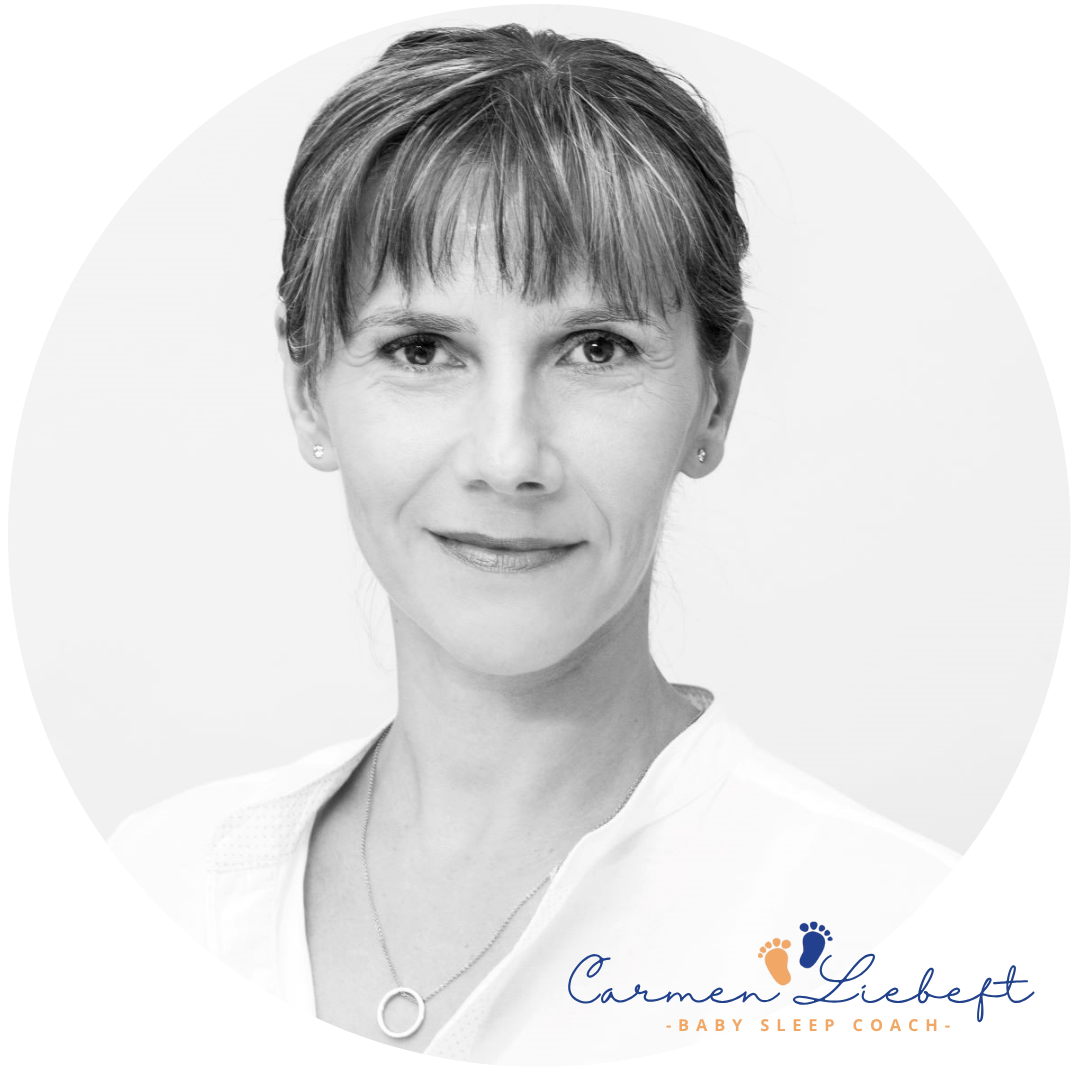
Carmen Liebert
Founder of Happy Baby Schlaf
Carmen Liebert is a certified Baby & Toddler Sleep Consultant, creator of the Baby Sleep Solutions Method. Over the last 5 years she has been helping 300+ English-speaking families across Europe get their sleep back through a holistic, science-based coaching approach which looks beyond routines and soothing techniques to uncover the missing pieces in each child’s sleep puzzle.
She specialises in babies & toddlers’ sleep from newborns to 4-year-old kids and also supports parents of autistic children with sleep challenges.