Sensory Input and Baby Sleep: Too Much, Too Little or Just Right?
Have you ever wondered why your toddler suddenly becomes incredibly active just before bedtime?
Or why your baby starts kicking, rubbing their face, babbling or practising new skills in the middle of the night?
In my baby sleep coaching practice, I usually start with two explanations: overtiredness and sensory stimulation.
A baby or toddler who is restless at bedtime or active during the night is often overtired, seeking sensory input, practising a new skill, or a mix of these. Start with bedtime, because an earlier bedtime is often the best solution. Then offer calm movement and connection earlier in the evening, and watch what helps over three days.
Understanding the difference can help you respond to your child’s needs and make bedtime more pleasant for everyone.
First Explanation: The Witching Hour and the Second Wind
Your toddler was showing clear signs of tiredness about 30 minutes ago. But now they’re running around the living room, jumping on the sofa and laughing as if bedtime were the last thing on their mind.
Sound familiar?
This sudden burst of energy is often called the second wind, and it can happen when a child has missed their natural sleep window.
When children become overtired, they may become more restless, emotional or unusually active. This higher state of alertness can raise cortisol levels and make settling harder, even when they desperately need sleep.
The term Witching Hour traditionally describes increased evening fussiness in babies, but toddlers can experience a similar challenge, if overtired.
What can you do?
- Watch for the first tired signs. If your child becomes quieter, loses interest in toys, rubs their eyes, yawns or starts seeking more cuddles, begin winding down. Don’t wait until they’re running around the living room or cry hysterically.
- Look at the last nap. If your child skipped a nap or had a short lunch nap, consider bringing bedtime forward by 30 minutes.
- Keep the last part of the evening predictable. Dim the lights, put exciting toys away and follow your familiar bedtime ritual.
- Avoid trying to exhaust them. A toddler who is already overtired needs to borrow your calm to get ready for sleep.
Sometimes, the best sleep intervention is an earlier bedtime!
Second Explanation: Your Child’s Sensory Needs
Now, let’s look at another important piece of the baby sleep puzzle: sensory input.
What is Sensory Input?
Sensory input is all the information your baby’s brain receives through their senses.
We usually think about the 5 familiar senses: sight, hearing, touch, taste and smell.
But 2 additional senses are especially relevant to babies and toddlers:
- Vestibular sense: Helps your child understand movement and balance. Think rocking, rolling, dancing, crawling and swinging.
- Proprioceptive sense: Helps your child be aware of their body in space. Think pushing, pulling, climbing and moving against resistance.
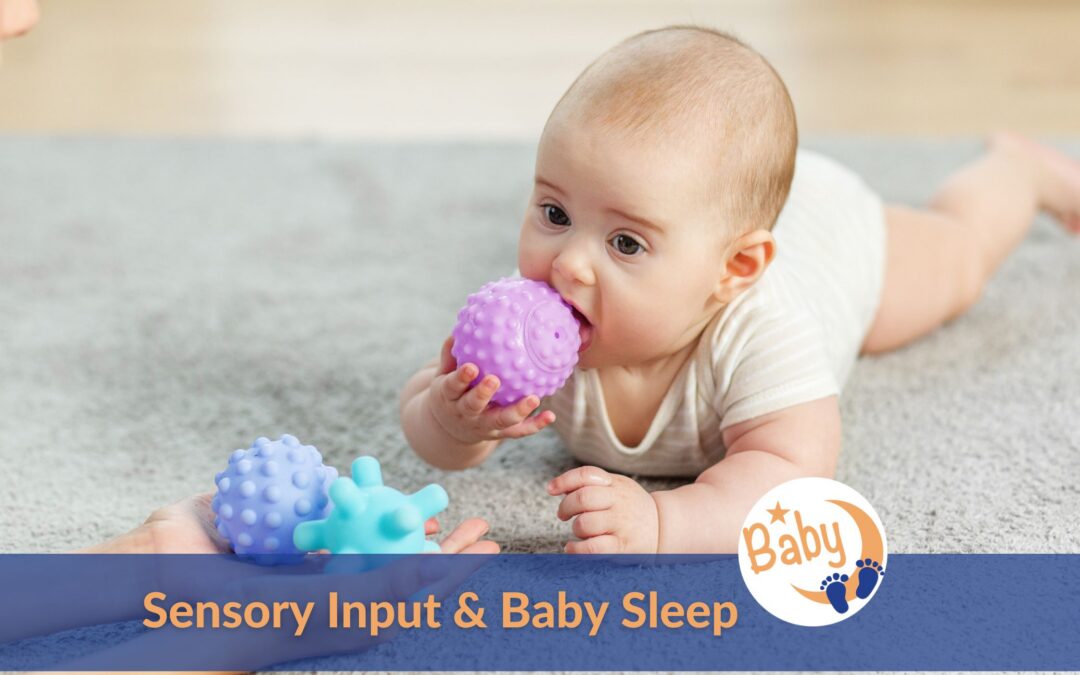
Every time your baby rolls across the floor, explores a new texture (including with their mouth) or reaches for a toy, their brain receives sensory information.
These everyday experiences support movement, learning and body awareness.
And yes, they can also help your baby calm their nervous system down and prepare them for sleep.
Too Much or Too Little Sensory Stimulation?
Some children are particularly sensitive to sensory input and need less of it. Others seem to actively seek more movement, touch or physical experiences.
And sometimes the same child can react differently depending on how tired they are.
Busy days add up. Screens, noisy Kita rooms, crowded playgrounds and packed family schedules all increase the amount of sensory input a child has to process. Rather than trying to eliminate stimulation, we can learn to manage it and offer the sensory experiences that suit each child’s needs.
| What you notice | What you could try |
| Your baby turns away, cries or becomes unsettled after a busy outing. | Move somewhere quieter, reduce noise and light, and offer familiar physical comfort. |
| Your toddler keeps climbing, jumping or pushing things around. | Offer supervised movement earlier in the evening, such as pushing a basket of soft toys or climbing over floor cushions. |
| Your baby repeatedly rubs their face, touches their hair or seeks contact. | Try cuddles, a relaxing massage or exploring different textures during supervised play. |
| Your child becomes more excited after active play. | Stop the activity and move towards quieter interaction, a book or familiar bedtime songs. |
These behaviours are clues, not diagnoses. Restlessness can also reflect overtiredness, discomfort, temperament or a developmental change.
Try observing your child for 3 evenings. Notice what happened during the day, how the afternoon goes, when restlessness started and whether movement or quiet activities helped. Try observing your own mood as well.
You may begin to recognise a pattern.
When your Baby Practises new Skills at Night
Have you ever watched your baby wake up in the middle of the night and suddenly start practising crawling, sitting or standing?
Perhaps they’ve recently learned to pull themselves up, and now they seem determined to demonstrate their new talent at 2 am.
Development doesn’t stop at bedtime!
During periods of developmental leaps, some babies experience changes in their sleep. New abilities can coincide with more movement and wakefulness at night, and many babies seem keen to practise them whenever they wake between sleep cycles.
Here’s what I recommend:
- Practise the new skill during the day. If your baby has learned to stand, help them practise bending their knees and sitting back down safely. If they’re learning to crawl, offer plenty of supervised floor time.
- Give them space at night. If your baby is awake and moving around in their safe cot, you don’t need to do anything immediately.
- Help when needed. If they’re crying, distressed or unable to get back down safely, respond and assist them.
- Keep nighttime boring. Use a quiet voice, no light and intermittent touch. There’s no need for an enthusiastic audience at 2 am!
And remember: the cot is mainly for sleeping. Keep it free from toys, books, cushions and other loose objects during your baby’s sleep. However, one soft toy with mom’s smell can be a good option for comfort & safety, from a certain age.
7 Simple Sensory Activities to Try Before Bedtime
You don’t need expensive sensory toys or a complicated activity schedule.
Choose one or two activities your child enjoys, rather than trying everything in one evening. Start more active activities earlier and save the quieter ones for the final 20 minutes before bedtime.
- A relaxing massage
After the bath, spend 3-5 minutes massaging your baby’s feet, legs, belly or back with slow, comfortable strokes. Watch their reaction. If they relax and enjoy it, continue. If they pull away or become restless, stop.
You can read more about baby foot massage in my article about reflexology and baby sleep.
- Pushing and carrying
For a toddler who loves movement, turn tidying up into a little physical activity.
Ask them to push a small basket filled with soft toys across the room and deliver the toys to their sleeping places. A few minutes is enough. Keep the basket light and praise them for being so helpful.
- Pillow cuddles
Place a couple of cushions on the floor and invite your toddler to snuggle beside you, roll over them or give a favourite teddy a big hug. Many children enjoy the physical contact and pressure from cuddling.
Let your child control how much contact they want. Never restrict their movement or press cushions against their chest or face. And, of course, the cushions stay outside the cot.
- Touch-and-feel books
Choose a book with different fabric textures: soft, fluffy, smooth or slightly rough. Let your baby explore the pages with their fingers while you name what they’re touching.
This is a lovely activity for the quieter part of the bedtime ritual.
- Slow dancing
Hold your baby close and sway slowly while humming a familiar lullaby.
For an older toddler, invite them to dance with you for a minute or two before slowing down for a cuddle.
- Oral-motor play
Many babies enjoy activities involving their mouth, lips and breath. So give them a cold toy to chew on (this is not just for teething).
With an older toddler, try blowing bubbles together, making funny animal sounds or humming a familiar song.
- A little race to the bathroom
For a toddler who resists the bedtime transition, try a playful challenge: “Who can get to the bathroom first and brush their teeth?”
Keep it short and light-hearted. Once you’re in the bathroom, slow things down again.
The aim is to make the transition easier, without turning bedtime into the Olympic Games.
My tip: Pay attention to what happens afterwards. If your child becomes calmer, the activity may be a useful part of their routine. If they become more excited, move it earlier in the day or choose something quieter to calm down.
A Real Example from my Sleep Coaching Practice
During sleep coaching with an 11-month-old baby girl, I noticed something unusual. When she became very upset while learning to fall asleep without breastfeeding, she started pulling her own hair.
Naturally, her parents panicked.
Looking at the bigger picture, I considered several possible explanations. The baby was highly active and curious, and she was adjusting to a different way of settling. Hair-pulling might have been her attempt to cope with frustration and seek additional sensory feedback.
We discussed offering more opportunities for movement and sensory exploration during the day, while keeping her sleep routine predictable. Equally important was helping Mum respond calmly and confidently when her daughter became distressed.
By the end of our coaching, bedtime had become considerably calmer, and the baby was sleeping for stretches of six to eight hours. Her lunch nap still needed some support, but this was a normal sequence of events.
My takeaway: Unusual behaviour around sleep deserves more attention and care. A baby pulling their hair may be communicating distress, seeking sensory input or both. Understanding the whole picture, including sleep habits, development, temperament, daily stimulation and parental responses, helps us choose a suitable way to support them and improve their overall sleep.
If your child pulls their hair very often, or you notice a sudden change in their behaviour, sleep, feeding or development, mention it to your paediatrician. Behaviour around sleep can have many causes, and a medical check can rule out the ones that need treatment.
Finding the Right Balance for Your Child
A baby who seems unusually active before bedtime doesn’t automatically need more stimulation.
And some toddlers might need a bit of sensory stimulation at the end of a busy day to calm their nervous system down.
They might be overtired. They might be processing an exciting day. They might be practising a new skill or seeking physical comfort. And sometimes several of these factors come together.
What I suggest trying over the next 3 days
- Protect the sleep window. Keep naps and bedtime age-appropriate. If your child has had a particularly tiring day, consider an earlier bedtime.
- Make room for movement. Offer supervised floor play for babies and plenty of active outdoor play for toddlers during the day.
- Start winding down 20 minutes before bedtime. Reduce noise, dim the lights and put exciting toys away.
- Choose 2-3 calming activities. Try massage, a touch-and-feel book, slow dancing or cuddles, depending on how your child reacts.
- Observe rather than adding more activities. Does your child settle more easily, become more restless or show no noticeable difference?
Change one thing at a time where possible. That way, you’ll have a better idea of what is helping.
Sometimes, the missing piece of the sleep puzzle is found long before bedtime.
What happens during the day influences what happens at night, and the other way round. That is why I always look beyond bedtime when assessing a baby’s sleep.
If bedtime remains a daily struggle and you’re unsure what’s behind your child’s restlessness, I’d be happy to help you put the pieces of your baby’s sleep puzzle together.
Book your free 20-minute Discovery Call
—————————————————–
Frequently Asked Questions
Why is my toddler suddenly hyper before bedtime?
This is often a second wind: the child has passed their natural sleep window and becomes more alert instead of sleepier. Check the last nap and how long your child has been awake, and try bringing bedtime forward by about 30 minutes for a few days. If the burst of energy still appears at the same time every evening, offer supervised active play earlier and keep the final 20 minutes quiet.
Can sensory activities before bed help my baby sleep?
For many children, calm touch and slow movement, such as a foot massage, slow dancing or a touch-and-feel book, make the move towards bed easier. Choose two or three, and notice whether your child settles or gets more excited.
Why does my baby practise standing or crawling in the cot at night?
New motor skills often coincide with more movement and wakefulness at night, and many babies seem keen to practise when they wake between sleep cycles. If your baby is content, give them time and space to do that, even in the middle of the night. If they get upset and cry, help them, using a quiet voice and no light. Practising these new skills more during the day often helps.
Is it normal for a baby to pull their hair when upset or tired?
Although this is not a common reaction, some babies pull their hair or rub their face when they are overtired, frustrated or seeking sensory input, and I have seen it appear when sleep habits change. Look at sleep, daytime stimulation and how your child is coping. If it gets problematic, mention it to the paediatrician.
—————————————————-
Scientific Sources and Further Reading
- World Health Organization: Guidelines on Physical Activity, Sedentary Behaviour and Sleep for Children Under 5 Years of Age
- American Academy of Pediatrics: Sensory Integration Therapy
- American Academy of Pediatrics: Sensory Integration Therapies for Children With Developmental and Behavioral Disorders

Carmen Liebert
Founder of Happy Baby Schlaf
Carmen Liebert is a certified Baby & Toddler Sleep Consultant, creator of the Baby Sleep Solutions Method. Over the last 5 years she has been helping 300+ English-speaking families across Europe get their sleep back through a holistic, science-based coaching approach which looks beyond routines and soothing techniques to uncover the missing pieces in each child’s sleep puzzle.
She specialises in babies & toddlers’ sleep from newborns to 4-year-old kids and also supports parents of autistic children with sleep challenges.